NTEP-Certified Scales: What Certification Means
Learn what NTEP certification means for a scale, what a Certificate of Conformance covers, and what US buyers must verify before installation and use.
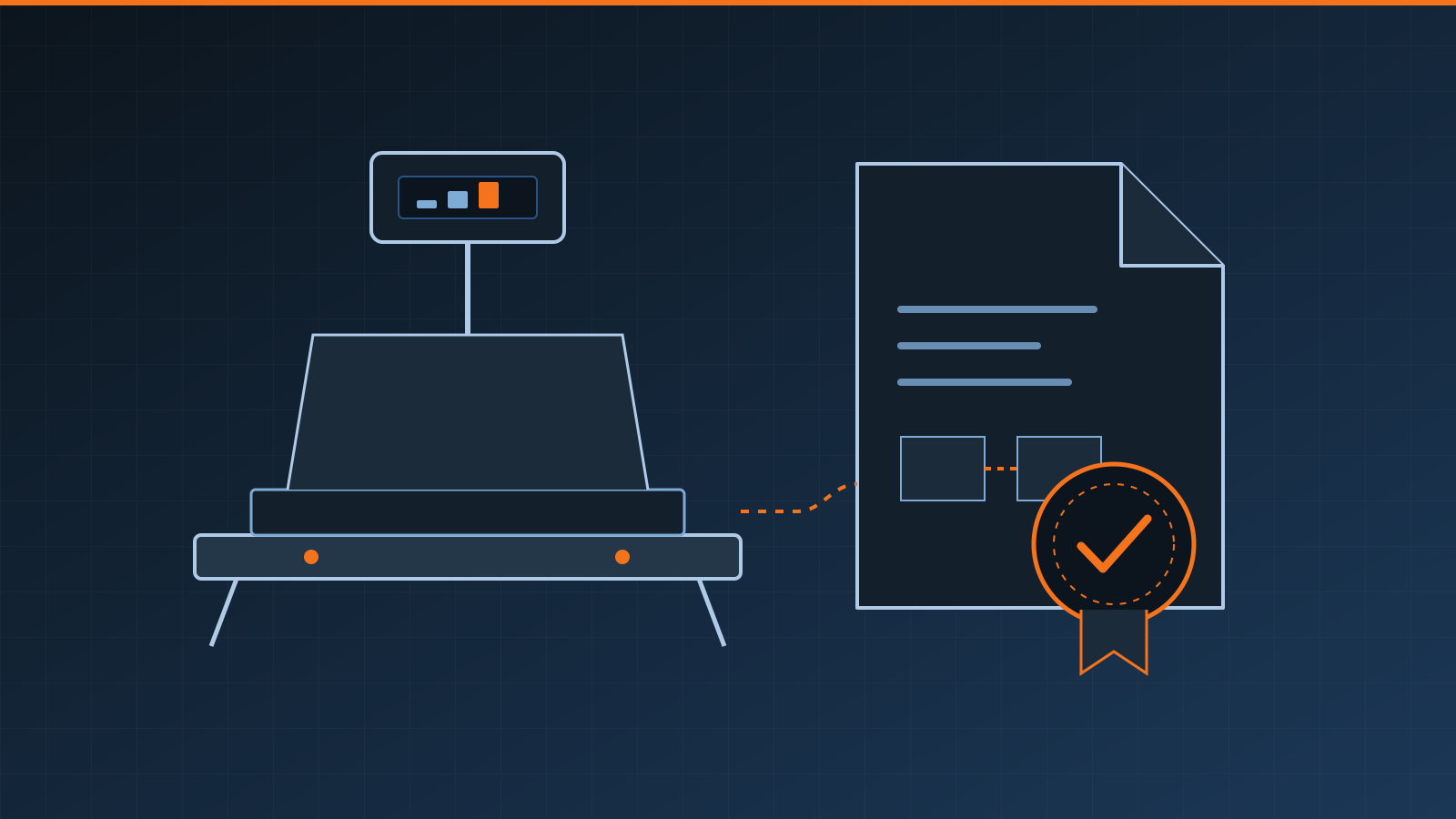
An NTEP-certified scale is a weighing-device type evaluated through the US National Type Evaluation Program and covered by a Certificate of Conformance. For US commercial weighing, that certification is often an essential purchasing requirement. It is not, however, blanket permission to use any unit in any transaction: the certificate status and scope, exact configuration, installation and local weights-and-measures requirements still matter.
Key takeaways
- NTEP is the US National Type Evaluation Program, administered by the National Council on Weights and Measures (NCWM).
- Certification applies to a device type and defined configuration, not automatically to every installation carrying a similar model name.
- The Certificate of Conformance is the key document to check before purchase.
- Type certification does not replace local inspection, sealing, registration or other requirements.
- Internal process weighing may not require NTEP equipment, but regulated commercial use often does.
- Get written confirmation of the model, components and intended use before ordering.
What NTEP certification covers
NTEP provides a uniform evaluation process for weighing and measuring device types used in US commerce. A device is tested against the requirements applicable to its category. When the evaluated type complies, NCWM issues a Certificate of Conformance, commonly called a CC.
The certificate identifies what was evaluated. Depending on the equipment, its scope may include:
- the manufacturer and model family;
- device type and intended application;
- capacity and scale division parameters;
- indicator, platform, load-cell or weighing-element combinations;
- software or firmware information where relevant;
- conditions, limitations or special notes attached to the approval.
This detail matters because “NTEP certified” is not a generic quality badge. A product family may include both certified and non-certified variants. Changing an indicator, load cell, capacity, division size or software configuration can place the assembled system outside the certificate scope.
NCWM publishes an official explanation of NTEP and maintains the Certificate of Conformance database used to verify issued certificates.
NTEP certification versus permission to use a scale
The most important distinction is between type evaluation and approval of a particular unit in service.
NTEP evaluates the design or type. State or local weights-and-measures authorities enforce the rules for equipment used in their jurisdiction. Depending on the location and application, a specific scale may need to be installed by a qualified provider, placed in service, inspected, registered, sealed or periodically re-examined. Environmental suitability, foundation quality, setup and calibration also affect whether the installed system performs correctly.
In other words, an NTEP Certificate of Conformance is evidence that the covered type successfully completed the national evaluation process. It does not prove that:
- the seller supplied the certified configuration;
- the scale was installed correctly;
- the scale passes inspection after installation;
- the chosen capacity and division size suit the transaction;
- local administrative requirements have been completed.
For a broader explanation of type approval and individual verification, see our guide to legal-for-trade scales. Always ask the state or local authority having jurisdiction what is required for your site and use.
When businesses typically specify an NTEP scale
An NTEP-certified configuration is commonly specified when a weighing result determines a commercial quantity or charge in the United States. Examples include goods sold by weight, incoming material purchased by weight, freight or service fees based on weight, and regulated quantity declarations.
The legal trigger is not simply whether a scale sits in a business. A warehouse scale used only to check inventory or identify process variation may have a different compliance need from an identical-looking scale used to invoice a customer. Likewise, a shipping check that does not establish the billed weight may differ from a measurement used directly in a transaction.
Because states and applications differ, treat these examples as screening questions rather than legal conclusions. Describe the transaction to the relevant weights-and-measures authority before selecting equipment.
NTEP scale buying checklist
Use this checklist when comparing quotations:
| Check | What to request | Why it matters |
|---|---|---|
| Intended use | Written description of the transaction and materials | Determines whether regulated commercial weighing applies |
| Certificate | NTEP Certificate of Conformance number | Lets you verify its status and current scope |
| Exact model | Model and option codes on the quotation | Similar product names can cover different configurations |
| Metrological setup | Capacity and displayed division size | Must match both the certificate and operational need |
| Components | Indicator, base, weighing element and load-cell details | The complete system must fit the approved configuration |
| Software | Version or module details if the certificate addresses them | Uncovered changes may affect conformity |
| Environment | Indoor/outdoor location, washdown, temperature and vibration | Certification does not correct a poor application fit |
| Local process | Installation, inspection, registration and sealing steps | These may be required before commercial use |
| Service | Calibration and repair coverage near the site | Reduces downtime and supports continued performance |
| Records | Certificate, installation and service documentation | Supports inspection, audits and future maintenance |
Do not accept “NTEP available” as sufficient. Ask whether the quoted price is specifically for the certified version and whether every selected option remains within the certificate.
How to verify a Certificate of Conformance
Do not rely on a product-page badge or a statement that equipment is “NTEP available.” Verify the exact quoted configuration against the primary record:
- Get the CC number in writing. Ask the supplier to place the Certificate of Conformance number on the quotation for the equipment being offered.
- Search the official database. Use the NCWM Certificate of Conformance search. NCWM recommends starting broadly with the CC number or manufacturer; partial manufacturer, certificate or model information can help when the first search is too narrow.
- Check the certificate status. An active certificate is in force for devices being manufactured or remanufactured. NCWM notes that equipment already manufactured, installed or held in inventory under an inactive certificate may still be used, sold, repaired or resold, subject to local laws and regulations. Ask the supplier and local authority how the status affects the exact unit offered.
- Match the identity. Compare the manufacturer, model or family identifiers in the certificate with the quotation and, before commissioning, with the equipment nameplate and documentation.
- Match the metrological configuration. Check capacity, division size, weighing element, indicator and other listed components or software details. A familiar brand name is not enough.
- Read notes and limitations. Confirm that options, operating conditions and combinations selected for the project remain within the certificate scope. Ask the manufacturer or qualified scale provider to resolve anything unclear in writing.
- Confirm the local placement process. Give the authority having jurisdiction the intended transaction, site location and proposed configuration, then confirm any installation, registration, inspection or sealing steps required before use.
Keep a copy of the certificate, final quotation and installed configuration with the scale records. If the indicator, weighing element, software or capacity is changed later, repeat the scope check instead of assuming the original CC still covers the modified system. After commissioning, retain inspection, service and calibration records as well. A scale calibration certificate documents measurement performance, but calibration and NTEP type certification answer different questions.
Common purchasing mistakes
Treating certification as a brand-wide claim
NTEP evaluates specified device types. One certified model does not make every scale from the manufacturer certified.
Changing the system after approval
Replacing an indicator or weighing element with an apparently compatible part can alter the approved configuration. Confirm component changes before installation or repair.
Choosing divisions from display preference alone
A finer displayed increment is not automatically better or permitted. Capacity, division size, application and certificate scope must work together.
Ignoring the site
Poor foundations, binding, debris, drafts, vibration, electrical noise or unsuitable temperatures can undermine results even when the equipment type is certified. Correct installation and maintenance remain essential.
A practical procurement decision
Start with the transaction, not the catalog. Determine what the weight controls, where the scale will operate, the maximum and typical loads, the required readability, and who regulates the use. Then ask suppliers to quote an exact NTEP-certified configuration with its Certificate of Conformance number and local commissioning steps.
For noncommercial internal measurements, a non-NTEP model may offer a suitable and economical solution. For regulated US commercial weighing, specifying NTEP equipment early can prevent redesign, replacement and delayed approval. In either case, qualified scale professionals and the relevant local authority should make the final compliance determination.
Frequently asked questions
What is an NTEP-certified scale?
It is a scale configuration covered by a Certificate of Conformance issued through the US National Type Evaluation Program. NTEP evaluates device types against applicable US weights-and-measures requirements; it does not by itself approve every installation or use.
Does NTEP certification make a scale legal for trade?
Not automatically. NTEP certification addresses the device type. A specific scale may also require correct configuration, professional installation, inspection, sealing or registration under the state or local authority that has jurisdiction.
How can I verify an NTEP claim before buying?
Ask for the Certificate of Conformance number and confirm that the exact model, capacity, division size, indicator, platform or load-cell configuration, and software version where applicable fall within its scope. Then confirm local acceptance with the authority having jurisdiction.
Do I need an NTEP-certified scale for internal weighing?
Often not when weight is used only for internal inventory, process control or shipping estimates, but the answer depends on the application and jurisdiction. If weight determines price, fee, quantity declaration or another regulated result, consult the local weights-and-measures authority before purchase.
Related guides
Scale Verification: What It Means and How to Plan It
Learn what scale verification confirms, how it differs from calibration, adjustment and inspection, and how to plan defensible quality or trade checks.
Lifting Equipment Inspection: A Practical Guide
Learn how lifting equipment inspection works, what to check before use, when competent-person examination is needed, and which records to retain.
Legal-for-Trade Scales: Approval, Verification and Use
What legal-for-trade means for weighing equipment, how type approval and verification work, and when a scale must be legal-for-trade to weigh goods for sale.